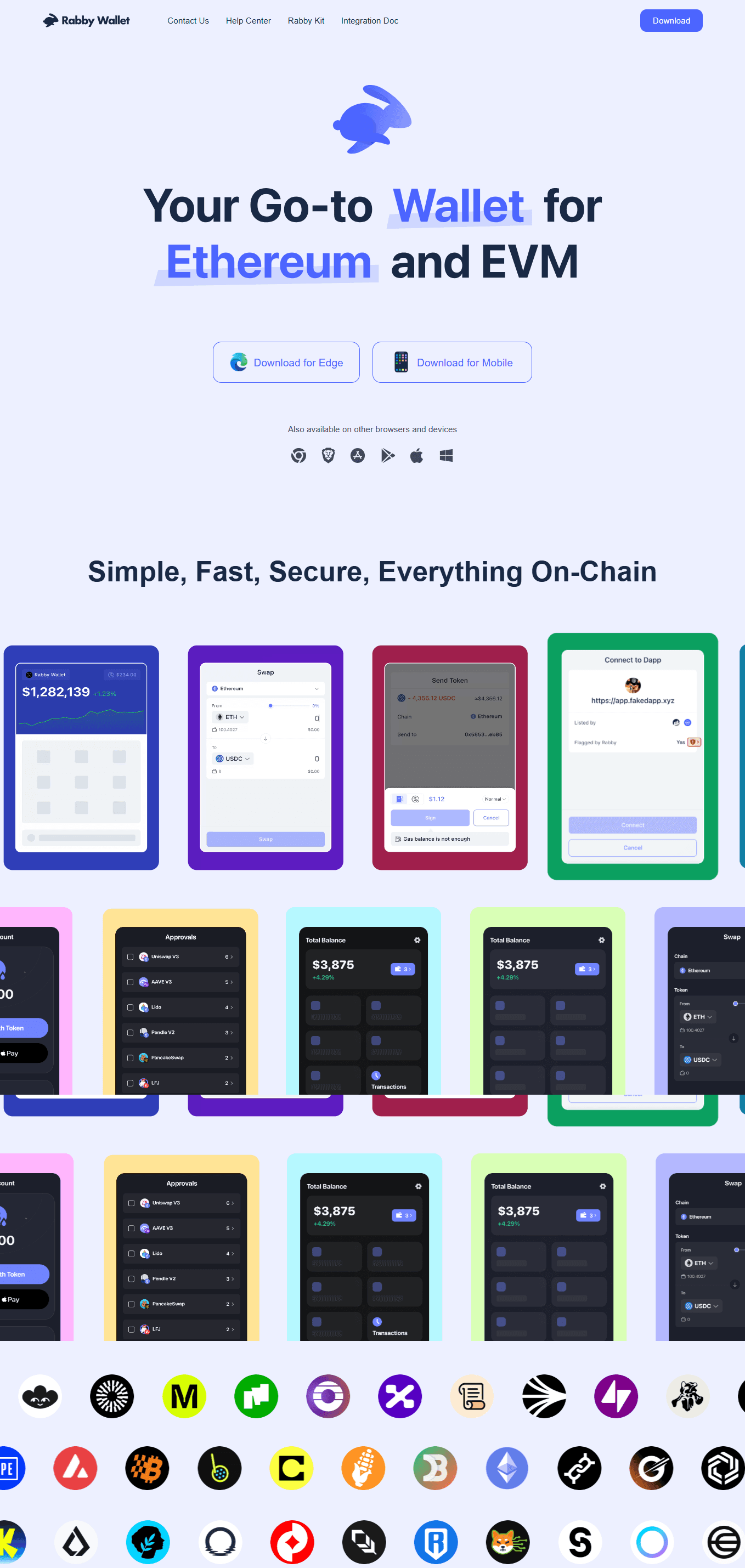
What is Rabby Wallet
Rabby Wallet is a non‑custodial Web3 wallet developed by DeBank. It’s designed primarily for Ethereum and EVM‑compatible blockchains, supporting a very wide range of networks — from Ethereum mainnet to Layer‑2s and alternate EVM chains like Polygon, Arbitrum, BNB Chain, Optimism, Avalanche, zkSync, and more. official-rabby-faq.teachable.com+2io--rabby.teachable.com+2
The wallet is available as a browser extension (for Chrome/Chromium-based browsers) and as a mobile app (Android; iOS version has had periods under review). CoinGecko+2support.rabby.io+2
Rabby aims to offer a smooth multi‑chain, DeFi-ready interface — letting users manage tokens, NFTs, and DeFi positions across chains, all from a unified wallet. rabby-wallet.framer.media+2rabbywallet.m-pages.com+2
Key Features and What Sets Rabby Apart
✅ Seamless Multi‑Chain Support & Auto Network Switching
One of Rabby’s standout features is auto-detecting which blockchain a connected dApp uses, and automatically switching to that network. No more manual RPC switching or network configuration — useful especially for users interacting across many chains. rabby-wallet.framer.media+2rabbywallet.m-pages.com+2
🔍 Transaction Simulation + Risk & Contract Alerts
Before you commit to any transaction — whether swap, transfer, or contract approval — Rabby runs a simulation. It shows a preview of what will happen: token balances before and after, gas costs, contract calls, etc. This transparency helps avoid badly structured transactions or unknowingly approving malicious contracts. official-rabby-faq.teachable.com+2rabby-wallet.framer.media+2
It also includes built-in risk warnings — for suspicious contracts, unusual token approvals, or unknown recipient addresses — adding a protective layer often missing in simpler wallets. official-rabby-faq.teachable.com+2support.rabby.io+2
🗂 Unified Asset Management & Portfolio Dashboard
Whether you hold ETH on mainnet, tokens on BNB Chain, or NFTs on Polygon — Rabby offers a unified view of all your assets across chains. You get token balances, historical transaction history, and (if using DeBank integration) DeFi positions — without switching wallets or toggling networks manually. CoinGecko+2rabby-wallet.framer.media+2
🔐 Hardware Wallet Integration & Non‑Custodial Security
Rabby does not custody your keys; private keys / seed phrases stay local on your device. It also supports connecting external hardware wallets (e.g. Ledger or Trezor) for enhanced security — giving you Web3 convenience + cold storage-level safety. rabby-wallet.framer.media+2support.rabby.io+2
🔁 Built‑in Swap, Gas Top‑Up & DeFi / dApp Compatibility
Rabby simplifies common tasks like token swaps, bridging, and topping up gas: you can swap tokens within wallet UI (across supported networks) and top up gas if you run low — without leaving the wallet. CoinGecko+2rabby.teachable.com+2
It also integrates well with many dApps, letting you connect via the wallet to DeFi protocols, NFT marketplaces, bridges, etc. support.rabby.io+2rabby.teachable.com+2
Getting Started — Setup & Use
Here’s a high-level workflow to begin with Rabby:
Install the browser extension from the official site (or Android app for mobile) — always verify you’re on the correct official domain to avoid phishing. CoinGecko+2support.rabby.io+2
Create a new wallet (seed phrase + password) or import an existing wallet (seed phrase / private key / JSON). official-rabby-faq.teachable.com+1
Once set up — connect to dApps directly, swap tokens, view portfolio across chains, manage approvals, and interact with smart contracts — all via the unified interface. rabby-wallet.framer.media+2faq-rabby.teachable.com+2
Optionally connect a hardware wallet for added security — and all transaction signing and confirmations happen securely. support.rabby.io+1
Advantages — Who Rabby Works Best For
Rabby Wallet is particularly suited for:
Multi‑chain / multi‑token users: If you hold assets across several EVM chains (Ethereum, BNB Chain, Polygon, etc.), Rabby simplifies everything under one roof.
Active DeFi users or dApp users: Thanks to auto network switching, swap & gas management, risk alerts — it’s more convenient and safer for interacting with multiple decentralized apps.
Security‑conscious users: Non‑custodial nature, optional hardware wallet integration, transaction simulation, and approval controls improve safety over many simple wallets.
Users who value convenience + control: Unified portfolio view, built-in swaps, no need for multiple wallets — useful whether you’re a casual or advanced user.
Things to Keep in Mind, Risks & Community Feedback
There have been reports of fake / scam versions of Rabby Wallet (especially on some mobile app stores). Always ensure you download only from the official site to avoid fraudulent apps. support.rabby.io+1
As with any wallet: never share your seed phrase or private keys. Rabby itself does not store or have access to them. support.rabby.io+1
Some users on community forums have raised concerns that not all features (e.g. on mobile) are as mature or fully supported as the extension — still a relative newcomer vs. older wallets. Reddit+1
Overall, community feedback tends to highlight its improved UX over older wallets, and the security‑centric features like transaction simulation and contract warnings. One Reddit user wrote:
“Rabby is much better than MetaMask… the anti‑phishing and anti‑scam measures makes me not want to try any other wallet.” Reddit
Conclusion: Is Rabby Wallet a Good Choice?
Yes — Rabby Wallet represents one of the more advanced, modern Web3 wallets today. It combines multi‑chain convenience, DeFi‑ready features, and improved security measures in a user-friendly package. If you manage assets across several blockchain networks or frequently interact with DeFi/dApps — and you’re security conscious — Rabby is a compelling choice.
That said, like any wallet: use it carefully. Only download official versions, safeguard your seed phrase, and consider pairing it with a hardware wallet for maximum safety.
If you like — I can draft a short “Getting Started with Rabby Wallet” guide (for beginners) that walks step‑by‑step from installation to first transaction.
Do you want me to build that for you now?